
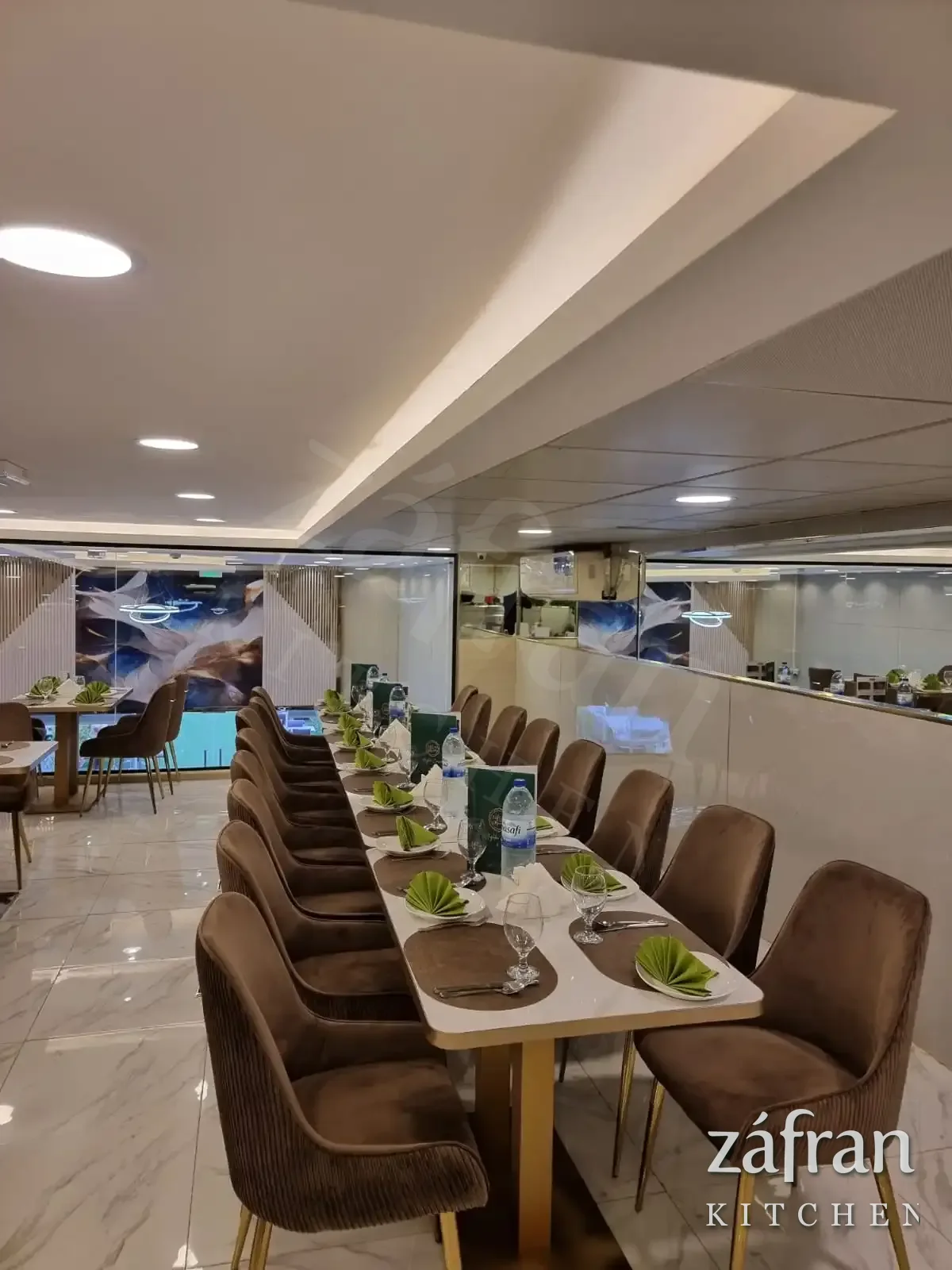
A Pakistani menu is not difficult, but it is unlabelled. Nothing on it tells you how hot it is, how long it takes, how big it is or whether it comes with anything. Everybody standing at the counter for the first time orders roughly the same wrong thing.
Here is the menu in the order you should meet it. Prices are ours, in Ajman Industrial Area 2, and they are low enough that getting it wrong costs you very little.
Order this first
A half chicken karahi, and bread, shared between two.
| AED | |
|---|---|
| Zafran chicken karahi, half | 15 |
| Four tandoori roti | 4 |
| Two people, properly fed | 19 |
Karahi is the dish the whole cuisine is organised around, and it is the right first order for three reasons. It is cooked in the pan after you order it, so you are tasting the kitchen rather than a holding tray. It is meat, tomato and spice with nothing to hide behind. And at AED 15 a half, a bad decision costs you nothing.
Expect fifteen to twenty minutes. That wait is the dish being made. A karahi that arrives in four minutes was made earlier.
What the sections actually mean
| On the card | What it is |
|---|---|
| Karahi | The pan, and the dish. Meat cooked hard in a heavy wok with tomato, served in the pan |
| Handi | A clay pot. Gentler, creamier, more of a standing sauce than a karahi |
| BBQ | Charcoal. Marinated meat on skewers or on the bone, over coals, after you order |
| Biryani / pulao | Rice dishes. Biryani is layered and spiced, pulao is cooked on stock and milder |
| Nashta | Breakfast. Paratha, chana, paya, nihari, chai |
| Breads | Roti is thin and unleavened. Naan is thicker and leavened |
Karahi is not curry in the British sense. There is no pre-made sauce. What is in the pan is what came out of the meat and the tomato, which is why it is thicker and more concentrated than you may expect and why there is less of it.
Handi is the opposite of karahi and the right order if you want something creamy and gentle. More on the handi section.
How to eat it
With bread, with your right hand. Tear a piece of roti, use it to pinch up a bit of meat and gravy, eat it in one. The bread is the cutlery. There is no separate plate, and you do not cut the dish up first.
Rice dishes get a spoon. Biryani and pulao are eaten with a spoon and that is normal.
Nobody will mind if you use a fork. But the bread method is genuinely better — you get the right ratio of gravy to meat in every mouthful, which a fork cannot do.
Order bread in rounds, not all at once. Bread out of a tandoor is good for about ten minutes. Four now, four later. There is more on the bread here.
On the spice question
The assumption that all of it is hot is the most common reason people order badly. There is an entire mild half of a Pakistani menu and most first timers never see it.
Mild, genuinely:
| AED | |
|---|---|
| Chicken pulao, small — cooked on stock, the mildest main | 10 |
| Chicken tikka, leg or chest, off the coals | 10 |
| Special butter chicken | 25 |
| Malai boti — cream marinade, the gentlest grill item | 25 |
| Chicken white handi — no chilli heat | 26 |
| Chicken white karahi, half — yoghurt and cream, pepper not chilli | 18 |
The "white" dishes are the answer if chilli is a problem. They are not watered down versions of the hot ones — they are a separate tradition built on dairy and pepper. There is a full page sorting the menu by heat.
And lassi at AED 5 is the fix if you overdo it. Dairy carries chilli away; water does not.
Leave these for your third visit
Not because they are bad. Because they are a lot, and they land much better once you have a reference point.
Paya at AED 10. Mutton trotters simmered overnight until the stock turns silky. One of the great breakfasts anywhere, and genuinely unfamiliar in texture rather than in spice. More on paya.
Nihari at AED 10. Overnight beef shank in a thickened gravy with a heavy spice profile and a layer of rendered fat on top that is supposed to be there. More on nihari.
Shinwari karahi at AED 34 a half. Meat, tomato, salt and animal fat, and nothing else. It is the dish to judge a kitchen by, but you need a standard karahi in your memory first to understand what it is doing.
A first visit, costed
Two people, about AED 39, and you will not finish it:
| AED | |
|---|---|
| Zafran chicken karahi, half | 15 |
| Four tandoori roti | 4 |
| Chicken pulao, small | 10 |
| Two lassi | 10 |
| Total | 39 |
Add two kulfi at AED 6 each if you are staying.
Nothing here needs booking unless you are eight or more, and there is no dress code and no formality of any kind. It is an industrial area restaurant with a tandoor and a charcoal grill.
More on eating in Ajman as a visitor and on where the locals actually eat.
Finding us
Shop 8/1, ground floor, Amman Street, Ajman Industrial Area 2, beside Nesto Hypermarket. Free street parking directly outside, step free from the pavement, indoor and outdoor seating, families welcome at every table.
Open 7:30 am to midnight, every day, including Fridays and public holidays. Call or message 050 720 8707. We answer in English, Urdu, Hindi and Arabic, so ask us anything at the counter — including what things are.
We do not deliver. You can eat here or collect at the counter. The full menu with every price is on this site.
If you already eat Indian food, the useful companion page is what actually separates the two cuisines.
Common questions
- What should I order the first time at a Pakistani restaurant?
- A half chicken karahi and bread, shared. At Zafran Kitchen a half Zafran chicken karahi is AED 15 and four tandoori roti are AED 1 each, so two people eat properly for AED 19. Karahi is the dish the cuisine is built around, it is cooked in the pan after you order it, and it tells you more about a kitchen than anything else on the card.
- Is Pakistani food very spicy?
- Not all of it, and assuming it is leads people to order badly. There is a whole mild half of the menu built on yoghurt, cream and pepper rather than chilli. The white karahi, the white handi, butter chicken and the pulaos all carry little to no chilli heat.
- How do you eat Pakistani food properly?
- With bread, using your right hand. Tear a piece of roti, use it to pinch up meat and gravy, and eat it in one. There is no separate plate and no cutting up of the dish. Rice dishes like biryani are eaten with a spoon. Nobody will mind either way, but the bread method is genuinely better.
- What is a karahi?
- A karahi is the pan, a heavy wok, and the dish takes its name from it. Meat is cooked in it over a high flame after you order, with tomato and spice, and it is served in the same pan it was cooked in. It is not a curry in the British sense: there is no standing sauce, just what comes out of the meat and the tomato.
- How much should two people spend?
- Between AED 20 and AED 40 for two people eating properly in Ajman Industrial Area 2. A half chicken karahi with four roti is AED 19 for two. Add a rice dish at AED 10 and two lassi at AED 5 each and you are at AED 39 with food left over.
- What should I not order on a first visit?
- Paya, which is mutton trotters, and nihari, which is overnight beef shank, are both outstanding and both are a lot for a first visit. Save them for a morning once you know you like the territory. Shinwari karahi is also better understood after you have had a standard karahi to compare it to.
- what to order at a pakistani restaurant
- pakistani food for beginners
- pakistani dishes explained
- first time pakistani food
- pakistani menu guide
Hungry now
Order it instead of reading about it
The kitchen is open every day from half past seven in the morning until midnight.