
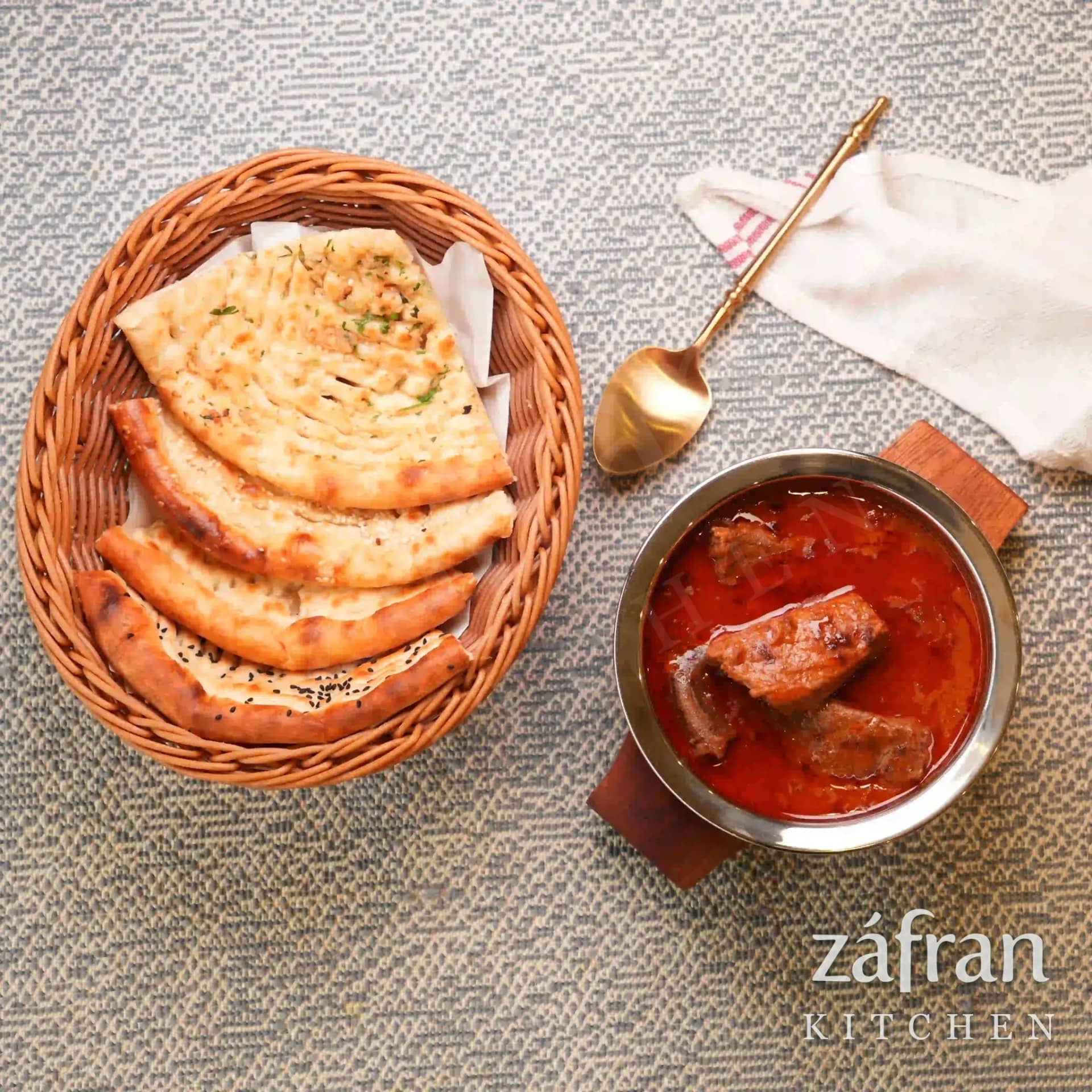
Nihari is the dish that separates a kitchen that cooks from a kitchen that reheats, because there is no fast version of it. It needs a pot on a low flame for six to eight hours, and either somebody started it last night or they did not.
Ours is AED 10, from 7:30 in the morning. Here is what it is, and how to judge any bowl of it anywhere.
What nihari actually is
Beef shank, cooked overnight. Low heat, a heavy spice blend, long enough that the connective tissue in the shank breaks down completely and the meat stops holding together.
The part most people do not know: the gravy is thickened with a little wheat flour. That is what gives nihari its gloss and the way it clings to bread, instead of sitting thin in the bowl like a soup. A nihari that runs like water has either been stretched or was never thickened properly.
The name traces to the Arabic for day, and the dish belongs to the morning. In old Delhi and in Lahore it was eaten at first light by people heading out to physical work, which is also an exact description of the Sanaiya at half past seven.
The garnish is not decoration
Nihari arrives with ginger julienne, green chilli and lemon on the side rather than stirred in, and this is deliberate.
The pot has been cooking for eight hours. Everything in it is deep, round and soft. What it needs at the point of eating is sharpness, heat and acid, and all three die if they go in early. So they go on at the table, by you, in the amount you want.
This also means you control the heat. Add all of the chilli and it is the hottest thing on our breakfast menu. Add none and it is a deep, slow beef stew a child could eat. Same AED 10 either way, which is worth knowing if you are ordering for a mixed table. There is more on what is actually hot on this menu.
The test: look at the fat
This is the single most useful thing on this page, and it works on any nihari in any city.
A properly made nihari has a distinct layer of rendered fat on the surface, usually reddish from the masala. It should be visible before you touch the bowl.
That layer is not a fault. It is rendered out of the shank across eight hours and it carries a large share of the flavour. Asking for it to be skimmed is asking for a worse dish. A nihari with no fat on top has been diluted, either with water to stretch the pot or because the cut was too lean to begin with.
Second test: push the meat with a spoon. It should give way with no resistance at all. If you have to cut it, it has not had its hours.
What it costs here
| AED | |
|---|---|
| Beef nihari | 10 |
| Mutton paya | 10 |
| Desi paratha | 2 |
| Sada paratha | 1 |
| Tandoori roti | 1 |
| Karak chai | 1 |
| Lassi | 5 |
A full nihari breakfast is about AED 13 — the bowl, a desi paratha and a karak chai.
For context on the going rate: a Dubai newspaper recently went looking for the best nihari in that city and the bowl it landed on was Dh17. Prices in the Ajman industrial area run below the Dubai rate across the board, which is most of the argument for eating here.
What to eat it with
Bread, not rice. Nihari is thickened specifically so it can be picked up, and a tandoori roti at AED 1 or a desi paratha at AED 2 is the correct tool. Rice is not wrong exactly, but it is not what the dish was built for.
Order one more bread than you think you need. Everybody does this. The gravy outlasts the bread every time.
Karak chai after, not during. At AED 1 it is the standard finish to a desi breakfast in this country and it cuts through the fat properly.
When to come
From 7:30 am, every day. The tandoor is lit before half past seven because a clay tandoor takes about forty minutes to come up to temperature, so somebody is in the kitchen before seven.
Come earlier rather than later. Nihari is cooked as a batch overnight and when the pot is finished it is finished until the next one. A kitchen that tells you nihari is done for the day at eleven in the morning is telling you it cooks in batches, which is the thing you actually want to hear.
More on the whole desi breakfast, on mutton paya specifically, and on the case for this kitchen dish by dish.
Finding us
Shop 8/1, ground floor, Amman Street, Ajman Industrial Area 2, beside Nesto Hypermarket. Free street parking directly outside, step free from the pavement, indoor and outdoor seating, families welcome at every table.
Open 7:30 am to midnight, every day, including Fridays and public holidays. Call or message 050 720 8707. We answer in English, Urdu, Hindi and Arabic.
We do not deliver. You can eat here or collect at the counter. The full menu with every price is on this site, and each area of Ajman has its own page with the route in.
Common questions
- Where can I eat beef nihari in Ajman?
- At Zafran Kitchen, Shop 8/1 on Amman Street in Ajman Industrial Area 2, beside Nesto Hypermarket. Beef nihari is AED 10 a bowl and it is served from 7:30 am. A desi paratha alongside is AED 2 and karak chai is AED 1, so a full nihari breakfast comes to about AED 13.
- How much should nihari cost in the UAE?
- Between AED 10 and AED 25 depending on the emirate and the cut. A Dubai newspaper went looking for the best nihari in that city and the bowl it settled on was Dh17. In the Ajman industrial area the going rate is lower, and ours is AED 10.
- What is nihari made of?
- Beef shank, cooked overnight on a low heat with a heavy spice blend until the connective tissue breaks down and the meat gives way completely. The cooking liquid is thickened with a little wheat flour, which is what gives nihari its glossy, clinging texture rather than the thinness of a soup.
- Why is nihari eaten for breakfast?
- Because of how it is cooked. Nihari needs six to eight hours on a low flame, so a pot started in the evening is ready at dawn. The name comes from the Arabic for day, and in Delhi and Lahore it was eaten at first light by people going out to physical work. It is still a breakfast dish in the Sanaiya for exactly that reason.
- How do I know if nihari is good?
- Look at the surface. A properly made nihari carries a distinct layer of rendered fat, usually reddish from the masala, sitting on top. That layer is not a fault and you should not ask for it to be skimmed, because it is where much of the flavour is. A nihari with no fat on it has been thinned.
- What is the difference between nihari and paya?
- Different cuts and different textures. Nihari is beef shank in a thickened, glossy gravy with a strong spice profile. Paya is mutton trotters simmered until the collagen dissolves, which makes the stock silky and slightly sticky rather than spicy. Both are AED 10 here, both are breakfast, and most regulars have a firm preference.
- nihari ajman
- beef nihari near me
- best nihari ajman
- nihari price uae
- nalli nihari
Hungry now
Order it instead of reading about it
The kitchen is open every day from half past seven in the morning until midnight.