
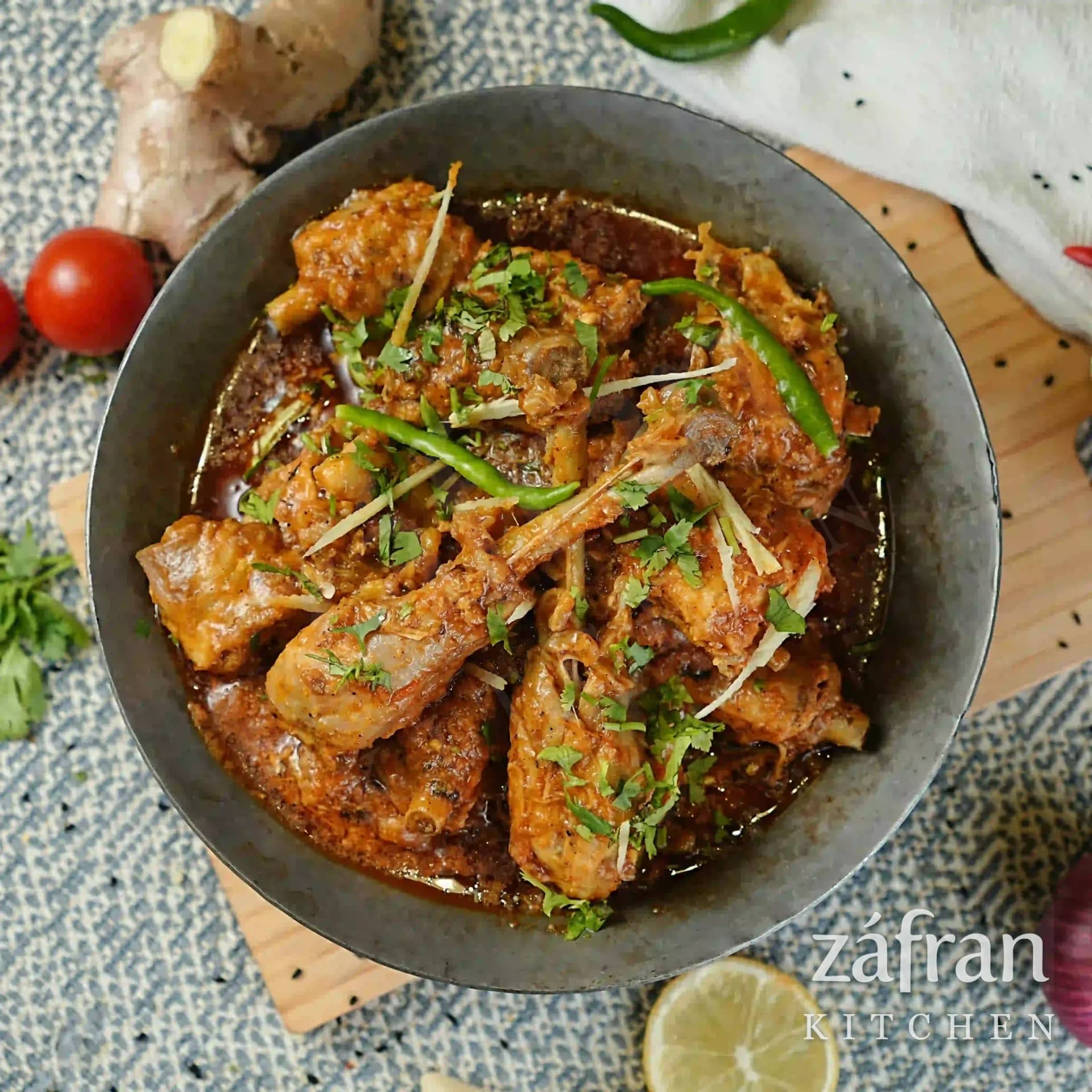
This question gets asked constantly in the UAE, where both cuisines sit on the same street, and it usually gets answered badly in both directions — either "they are the same thing" or a long list of differences that do not survive contact with an actual menu.
Here is the useful version, written by a Pakistani kitchen.
First: the comparison is with north India
India is not one cuisine. Comparing Pakistani food with "Indian food" compares a country of 240 million with a country of 1.4 billion that contains Kerala, Bengal, Goa and Tamil Nadu — none of which look much like Lahore and none of which look much like each other.
The honest comparison is Pakistani cooking against north and northwest Indian cooking, and there the answer is: very close indeed.
Punjab is the reason. It sits on both sides of the border, it was one place until 1947, and the cooking did not partition. Punjabi food from Amritsar and Punjabi food from Lahore are the same tradition with a line drawn through it. Tandoor bread, karahi, daal, seekh kabab and lassi are shared outright.
What genuinely differs
Three things, and only three are worth your attention.
1. Beef. This is the clearest, most practical difference. Beef is ordinary on a Pakistani menu and largely absent from an Indian one, for religious reasons on the Indian side. Our card has beef nihari at AED 10 and special beef pulao from AED 10, both of which would be unusual in an Indian restaurant.
Lamb and mutton are common in both. Pork is absent from both.
2. The weight given to meat. Pakistani menus lean harder on meat as the centre of the plate. India has vast, deep vegetarian traditions that have no real equivalent in Pakistan — not because Pakistanis do not eat vegetables, but because vegetarianism as a culture is not a significant force there. Our vegetarian section is genuine and good, but it is a section rather than half the book. More on what to order from it.
3. Bhunai. The technique most often named as the heart of Pakistani cooking: slow frying spices, onion and meat together until the oil separates and the masala darkens, before anything else happens. It is why a karahi ends up concentrated rather than saucy, and it is not a step you can rush.
What is NOT a real difference
Worth clearing out, because these come up constantly and do not hold.
Spice level. We looked, and the published comparisons contradict each other outright — some call Pakistani food hotter, others call it milder with a simpler spice palette. Neither claim is measured against anything. The variation between two kitchens cooking the same dish is far larger than any difference between the cuisines. Judge the kitchen, not the country. If heat matters to you, here is our menu sorted by it.
The breads. Roti, naan and paratha are shared completely.
The famous dishes. Biryani, nihari, kabab, daal, butter chicken — all present in both, with regional variations that cut across the border rather than along it. Biryani alone has at least three distinct styles.
The dishes that are distinctly Pakistani
If you know Indian food and want the parts that will actually be new:
| AED | Why it is different | |
|---|---|---|
| Beef nihari | 10 | Overnight beef shank. The Indian versions are usually mutton |
| Chargha, half / full | 18 / 35 | Lahori. Steamed in spice an hour, then fried to order |
| Mutton Shinwari karahi, half | 34 | Pashtun. Meat, tomato, salt and fat. Nothing else |
| Mutton Charsi karahi, half | 32 | Namkeen, slow rendered in its own fat, black pepper |
| Special beef pulao | 10 | Rice cooked in beef yakhni |
| Mutton paya | 10 | Trotters simmered overnight until the stock turns silky |
The Shinwari and Charsi karahis are the ones to try. They come from the Pashtun northwest, they are built on almost nothing, and they have no real equivalent on an Indian menu. More on the five mutton karahis.
And the breakfast menu is the biggest gap of all. Paya, nihari and chana from 7:30 am is a Pakistani institution and it is the meal visitors to Ajman almost never have. More on desi nashta.
So: will you like it?
If you already eat north Indian food, yes, and most of the menu will be familiar. Butter chicken, biryani, naan, daal, seekh kabab and tikka are all here and all recognisable.
Start with a half chicken karahi at AED 15 and four roti at AED 4 — AED 19 for two people, and it is the single dish that best explains what Pakistani cooking is doing differently. Then come back for the nihari.
If you have never eaten either cuisine, there is a guide that assumes nothing.
Finding us
Shop 8/1, ground floor, Amman Street, Ajman Industrial Area 2, beside Nesto Hypermarket. Free street parking directly outside, step free from the pavement, indoor and outdoor seating, families welcome at every table.
Open 7:30 am to midnight, every day, including Fridays and public holidays. Call or message 050 720 8707. We answer in English, Urdu, Hindi and Arabic.
We do not deliver. You can eat here or collect at the counter. The full menu with every price is on this site.
Common questions
- What is the difference between Pakistani and Indian food?
- Less than people expect, and the honest comparison is with north and northwest India rather than with India as a whole. Punjab sits on both sides of the border and the cooking there is close to identical. The real differences are meat, where beef is common in Pakistani cooking and largely absent from Indian for religious reasons, and emphasis, where Pakistani menus lean harder on meat and on slow fried masala.
- Is Pakistani food spicier than Indian food?
- There is no reliable answer and published comparisons contradict each other directly. Some describe Pakistani food as hotter, others as milder with a simpler spice palette. Variation between two kitchens cooking the same dish is far larger than any difference between the cuisines, so judge the kitchen rather than the country.
- What dishes are Pakistani rather than Indian?
- Nihari, paya, karahi and chargha are all far more common on a Pakistani menu, and beef dishes in general. Nihari and biryani exist in both countries, but beef nihari is a Pakistani staple while Indian versions are usually mutton. Chargha, a whole chicken steamed in spice and then fried, is Lahori and barely appears on Indian menus.
- Why do some Pakistani restaurants call themselves Indian?
- Commercial reasons, mostly outside South Asia. Indian food is the better known label in Western markets, so Pakistani owned restaurants have often used it because it sells. In the UAE both labels are well understood, so there is less reason for it here.
- What is bhunai?
- The slow frying of spices, onion and meat together at the start of a dish until the oil separates out and the masala darkens. It is the technique most often named as central to Pakistani cooking. It is why a karahi tastes concentrated rather than saucy, and it cannot be hurried.
- Can I eat Pakistani food if I like Indian food?
- Almost certainly, and you have probably eaten dishes from both already without noticing. If you know butter chicken, biryani, naan, seekh kabab and daal, you already know most of the ground. The unfamiliar part will be the beef dishes and the breakfast menu rather than anything on the main card.
- pakistani food vs indian food
- is pakistani food like indian
- difference pakistani indian cuisine
- pakistani restaurant ajman
- north indian food
Hungry now
Order it instead of reading about it
The kitchen is open every day from half past seven in the morning until midnight.