There are five mutton karahis on our card and the names are not marketing. They are genuinely different methods, and ordering the wrong one for your table is the most common mistake people make in this section.
The short version: Shinwari has tomato, Charsi does not, white has neither and uses cream instead, and Peshawari is the hardest cooked of the lot. Prices run from AED 30 to AED 34 for a half and AED 60 to AED 64 for a full.
The five, and how each is actually cooked
Zafran mutton karahi, AED 30 half / AED 60 full. The everyday karahi. Tomato, ginger, green chilli, a little more gravy than the Peshawari styles. This is the one to order if you want something to spoon over rice or mop with a lot of bread.
Mutton Charsi karahi, AED 32 / AED 62. Namkeen, meaning salted rather than spiced. No tomato at all. The meat is cooked slowly in animal fat until it renders and browns, then finished with a heavy hand of freshly cracked black pepper and coriander. It tastes of meat and pepper and nothing else, which is either the best thing on the menu or a disappointment depending on what you expected.
Mutton white karahi, AED 32 / AED 62. Yoghurt, cream and white pepper. No chilli heat at all. The mildest thing in the section and the right order if you are eating with children or with anyone who finds the others too much.
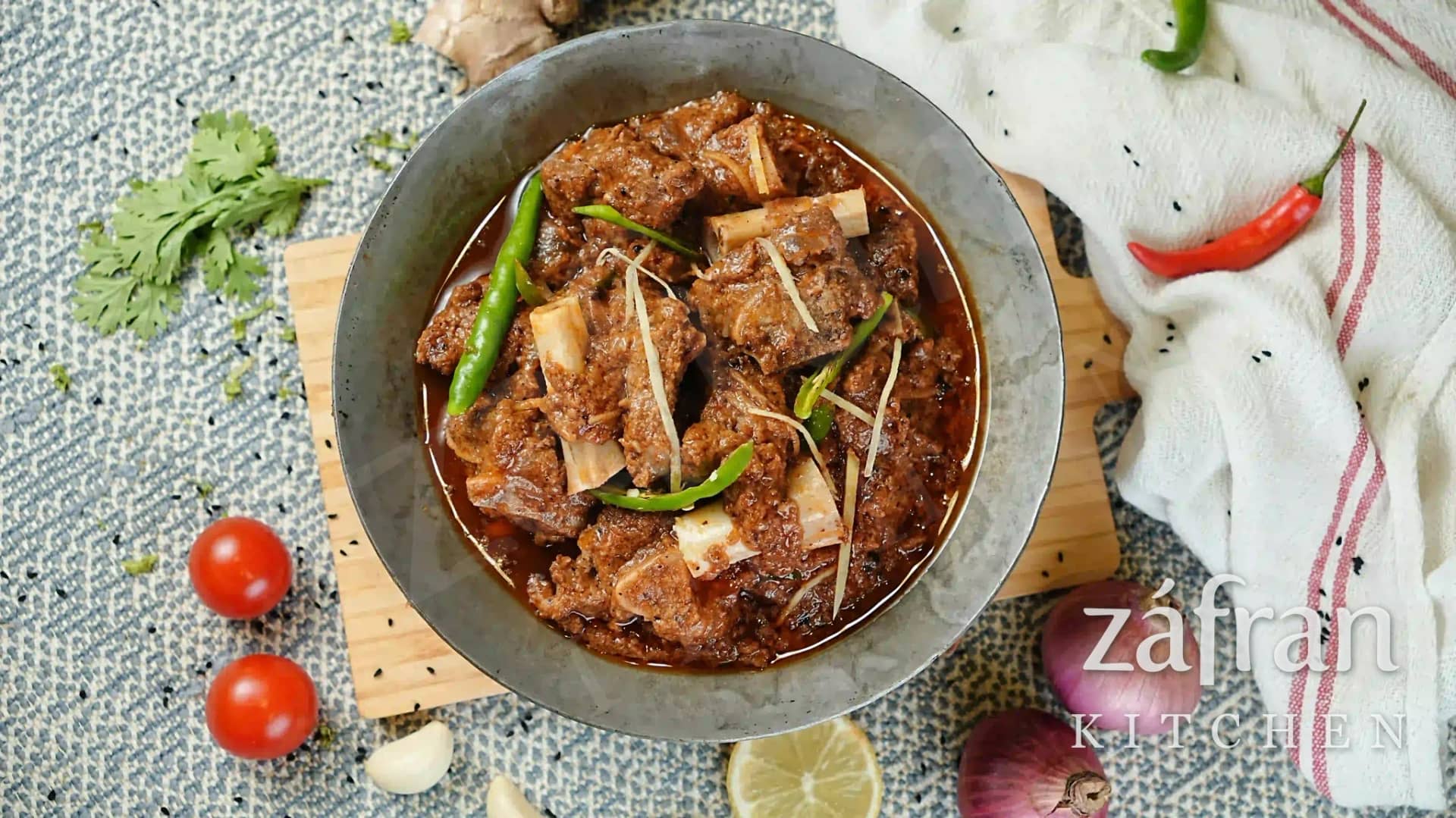
Mutton Shinwari karahi, AED 34 / AED 64. Meat, tomato, salt, green chilli and the fat that comes out of the meat. Nothing hides in it, which is why it is the dish that tells you most about a kitchen. If the meat is not right, a Shinwari has no gravy to hide behind.
Mutton Peshawari karahi, AED 34 / AED 64. The Peshawar cut, cooked hardest and driest of the five, served in the karahi it was cooked in.
The full section with both sizes is on the menu page. If you want the cook's explanation of why these methods produce different results, that is a separate piece: how Shinwari, Charsi and white karahi are cooked.
Half or full
A half feeds two people with bread. A full feeds four. Those are honest numbers, not restaurant numbers.
Where people go wrong is ordering a full for three and adding starters. A full mutton Shinwari at AED 64 with six roti at AED 1 is AED 70 and it is a lot of meat for three. Two halves of different karahis at AED 34 and AED 32 costs AED 66, feeds the same table, and gives everyone two things to eat instead of one.
Why it takes thirty minutes
Mutton is not chicken. The connective tissue needs time and the fat needs to render, and there is no version of a karahi where that happens in ten minutes. It goes in the pan when you order it, over a high flame, and it is finished when it is finished.
If a mutton karahi arrives in fifteen minutes, one of two things happened: it was cooked earlier and reheated, or the meat was par-cooked in bulk that morning. Both are common and neither produces the same dish.
Order bread and something to start when you order the karahi, not after. That is what the thirty minutes is for.
What to order alongside
Bread first: tandoori roti AED 1, butter naan AED 2, roghni naan AED 2. For a karahi you want plain roti rather than anything enriched, because the karahi is already rich.
Something sharp: salty lassi at AED 5. It does more for a heavy karahi than any soft drink.
If you want a second dish for the table, a clay pot handi from AED 24 is the right contrast, because it is soft and saucy where the karahi is dry and direct.
Ordering
A mutton karahi is the order most worth phoning ahead for. Send it to 050 720 8707 on WhatsApp thirty minutes before you arrive and it will be ready when you sit down rather than half an hour after.
Amman Street, Ajman Industrial Area 2, near Nesto Hypermarket, Shop 8/1, ground floor. Open every day, 7:30 am to midnight.
If you are still deciding, there is a piece on the best Pakistani restaurant in Ajman that goes dish by dish with the tests you can run yourself.
Common questions
- How much is mutton karahi in Ajman?
- At Zafran Kitchen a half mutton karahi starts at AED 30 for the Zafran, AED 32 for Charsi or white, and AED 34 for Shinwari or Peshawari. Full sizes are AED 60, 62 and 64. A half feeds two with bread, a full feeds four.
- What is the difference between Shinwari and Charsi karahi?
- Shinwari is meat, tomato, salt, green chilli and the fat rendered from the meat itself, with nothing else. Charsi is namkeen, cooked slowly in animal fat with no tomato and finished heavily with black pepper and coriander. Shinwari tastes of tomato and meat, Charsi tastes of meat and pepper.
- Which mutton karahi is best for someone who does not like heat?
- Mutton white karahi at AED 32 for a half. It is yoghurt, cream and white pepper with no chilli heat, and it is the mildest thing in the karahi section.
- How long does a mutton karahi take?
- Thirty minutes and upwards, because it is cooked to order in the pan over a high flame. Anything served faster than that was cooked earlier and reheated.
- mutton karahi ajman
- shinwari karahi near me
- charsi karahi
- peshawari
- ajman
Hungry now
Order it instead of reading about it
The kitchen is open every day from half past seven in the morning until midnight.