
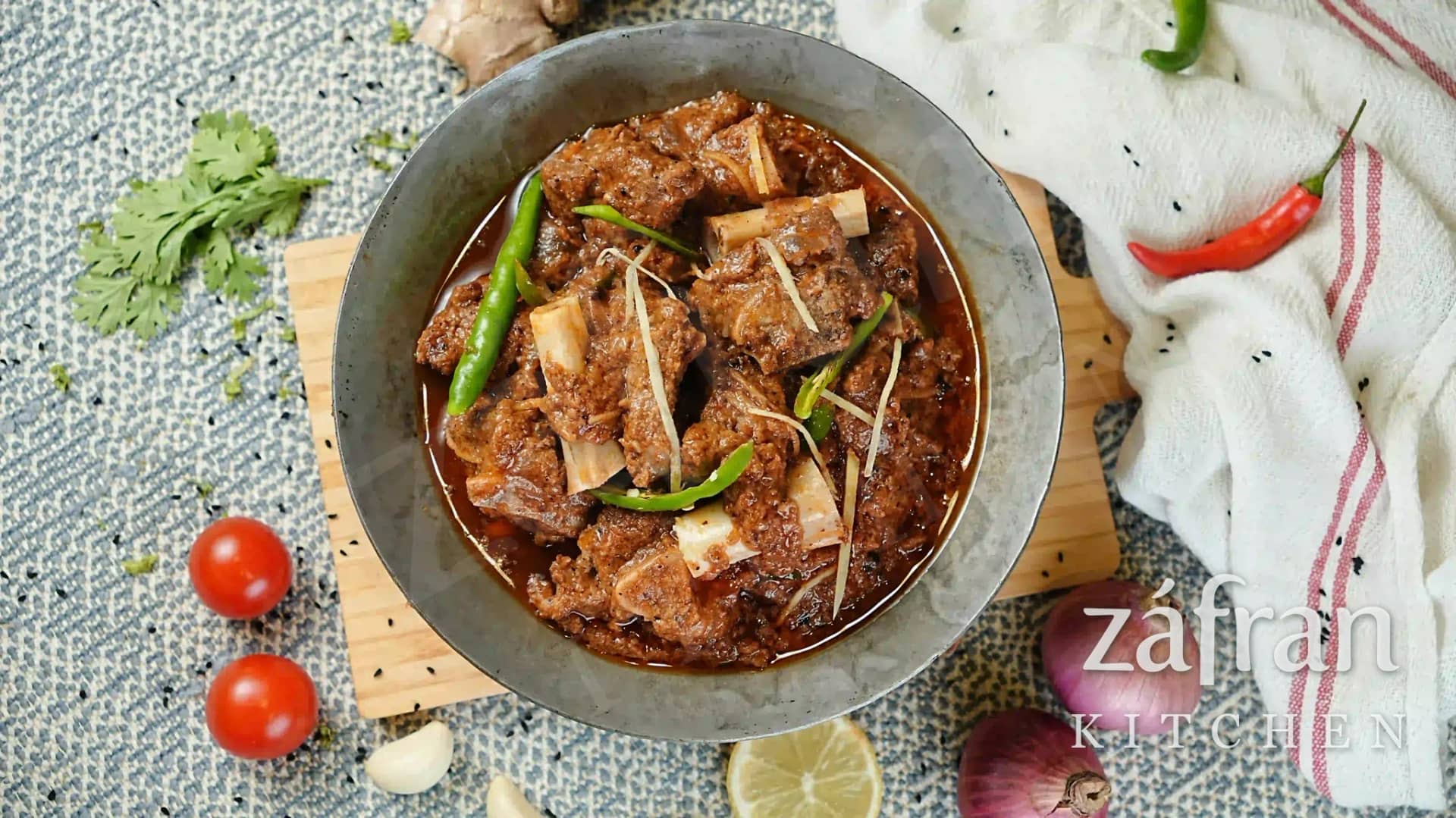
People stand at the counter and ask this every day, so it is worth writing down properly. Shinwari, Charsi and white karahi are not three names for the same dish with a different label. They are cooked differently, they taste different, and they suit different tables.
Shinwari karahi
Shinwari is the plainest of the three, and that is the whole point of it. Meat, tomato, salt, green chilli, and the fat that renders out of the meat itself. No onion, no garlic paste, no ginger, no yoghurt, no powdered masala.
Because nothing is hiding in it, Shinwari is the honest test of a kitchen. If the mutton is not good, or the fat is not rendered slowly enough, you taste it immediately. There is nothing in the pan to cover for you.
Order this one if you want to taste the meat rather than the spices.
Charsi karahi
Charsi comes from the same Peshawar tradition and looks similar in the pan, but it is cooked namkeen, which means it is salted and rendered for longer, with very little tomato and often none at all. It finishes with a heavy hand of black pepper and fresh coriander.
The result is richer and more savoury than Shinwari, with less of the sharpness that tomato brings. It takes the longest of the three to cook, which is why we ask for a little patience when you order it in the evening rush.
White karahi
White karahi leaves the tomato out entirely and builds the sauce on yoghurt and cream instead, seasoned with white pepper rather than red chilli.
It is the mildest thing on the karahi list by a distance. If you are eating with children, or with anyone who finds Pakistani food too hot, this is the one to order. It is not a compromise dish, it is just a different one.
Which one, and what it costs
| Karahi | Base | Heat | Half | Full |
|---|---|---|---|---|
| Mutton Shinwari | Meat, tomato, fat | Medium | 34 AED | 64 AED |
| Mutton Charsi | Meat, fat, black pepper | Medium | 32 AED | 62 AED |
| Mutton white | Yoghurt and cream | Mild | 32 AED | 62 AED |
| Zafran chicken karahi | Tomato, ginger, chilli | Medium | 15 AED | 30 AED |
| Chicken white | Yoghurt and cream | Mild | 18 AED | 32 AED |
A half karahi feeds two people with naan. A full feeds four. Most tables of four order one full mutton karahi, four naan and a lassi each, which comes to somewhere around thirty dirhams a head.
A note on timing
Every karahi on this list goes on the fire when you order it. That means fifteen to twenty minutes for chicken and closer to thirty for mutton. It is not a delay, it is the dish.
If you are in a hurry, the biryani and the pulao are cooked in batches through the day and will reach you in a couple of minutes. If you have the time, order the karahi and let it be made properly.
You can also send the order ahead on WhatsApp and tell us when you are leaving the house. It will be finishing as you park.
Prices, sizes and what to order for your table
This piece is about what happens in the pan. For the current prices across all five mutton karahis, which size feeds how many, and what to order alongside, see Mutton Karahi in Ajman.
Common questions
- Why does Charsi karahi have no tomato?
- Because it is namkeen, salted rather than spiced. The meat is cooked slowly in animal fat until it renders and browns, and tomato would add acid and moisture that stop that browning. The flavour comes from the fat and from black pepper added at the end.
- Which karahi is the mildest?
- The white karahi. It is built on yoghurt and cream with white pepper and no chilli, so it carries richness without heat. Chicken white karahi is AED 18 for a half, mutton white is AED 32.
- Why does a karahi take so long?
- Because it goes in the pan when you order it. Fifteen to twenty minutes for chicken, thirty and up for mutton. There is no way to render fat and soften connective tissue faster, and anything served quicker was cooked earlier.
- karahi
- how it is cooked
- guides
- ajman
Hungry now
Order it instead of reading about it
The kitchen is open every day from half past seven in the morning until midnight.